
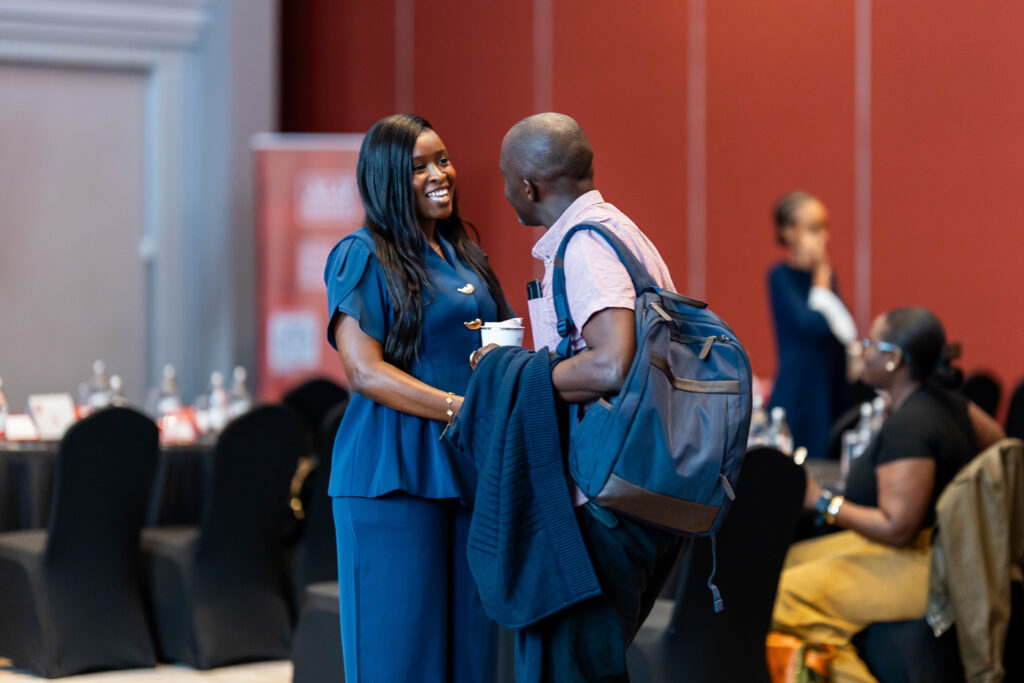
This September, 52 African Leadership University School of Business (ALUSB) students came together in Nairobi for the September Intensive, a week of classes, company visits and conversations with business leaders.
Bringing together 24 students from the September 2025 intake and 28 from the May 2026 intake, the intensive gave students time to focus on some of the sectors shaping business across Africa and see how they operate in a different market.
The ALUSB curriculum covers areas including Data Science & AI, Agribusiness and Conservation, alongside Finance, Marketing and Strategy. In Nairobi, students spent the week working across these subjects through academic sessions, Leadership Labs and Capstone work, while meeting businesses and leaders working in the region.
Seeing Business From Different Angles
Africa’s opportunities in technology, agriculture and conservation also raise questions about how businesses in these sectors grow, attract investment and remain commercially viable. This is why tailoring an EMBA education to the realities of doing business in Africa, rather than simply importing Western models, is important.
Throughout the intensive, students moved between their areas of specialization and the broader questions they will face as business leaders. Finance, Marketing and Strategy sessions sat alongside Data Science & AI, Agribusiness and Conservation, allowing students to consider both the opportunity within a sector and what it takes to build a business around it.
Conversations with industry leaders added another perspective. Zoe Karl-Waithaka joined students as a guest speaker, while Wachira Waruru, Managing Director of Royal Media Services, joined a Leadership Lab. Students heard how experienced leaders approach decisions in their own organizations and had the opportunity to bring questions from their coursework and careers into the discussion.
For students coming from different industries and parts of the continent, those conversations also opened up comparisons. A business model that makes sense in one market may need to change in another, and an opportunity can look very different depending on the customers, infrastructure and wider environment around it.
Getting Closer to the Market
Across the week, students also visited organizations in Nairobi, including Cellulant and Trade Development Bank Group.
The visits gave them a closer look at companies working across technology and finance and the decisions involved in operating and growing across African markets. Students could take questions from their academic sessions into these visits and hear directly from the people working through them.
A visit to Nairobi National Park brought another part of the curriculum into view. For students studying Conservation, it offered a different setting for thinking about the relationship between natural resources, economic development and sustainable business.
This exposure to different sectors and markets is an important part of an MBA designed for Africa. Rather than approaching the continent as a single business environment, students encounter different industries and operating contexts and learn to assess where opportunities exist and what it takes to pursue them.
A Week Designed to Connect the Dots
The intensive also brought two ALUSB cohorts into the same place for a week.
Students arrived with experience across different countries, industries and professions, which became part of the discussions throughout the program. Between academic sessions, Leadership Labs and company visits, they had time to compare how similar challenges play out in different markets and learn from one another’s experience.
By the end of the week, students had explored some of Africa’s key growth sectors, met leaders and organizations working within them, and considered how the skills they are developing across the MBA apply in practice.
The Nairobi Intensive is one part of the wider ALUSB Executive MBA experience and the approach captured in ALU’s 2025 Impact Report: giving students exposure to different markets, industries and perspectives as they prepare to build and lead businesses across Africa. Download the report to explore ALU’s broader vision for education and impact across the continent.